Ebola Outbreak in Democratic Republic of Congo Reaches Record Scale, No Approved Vaccine Yet
The Democratic Republic of Congo (DRC) is grappling with its biggest Ebola flare‑up in history, and the world is watching with growing alarm.
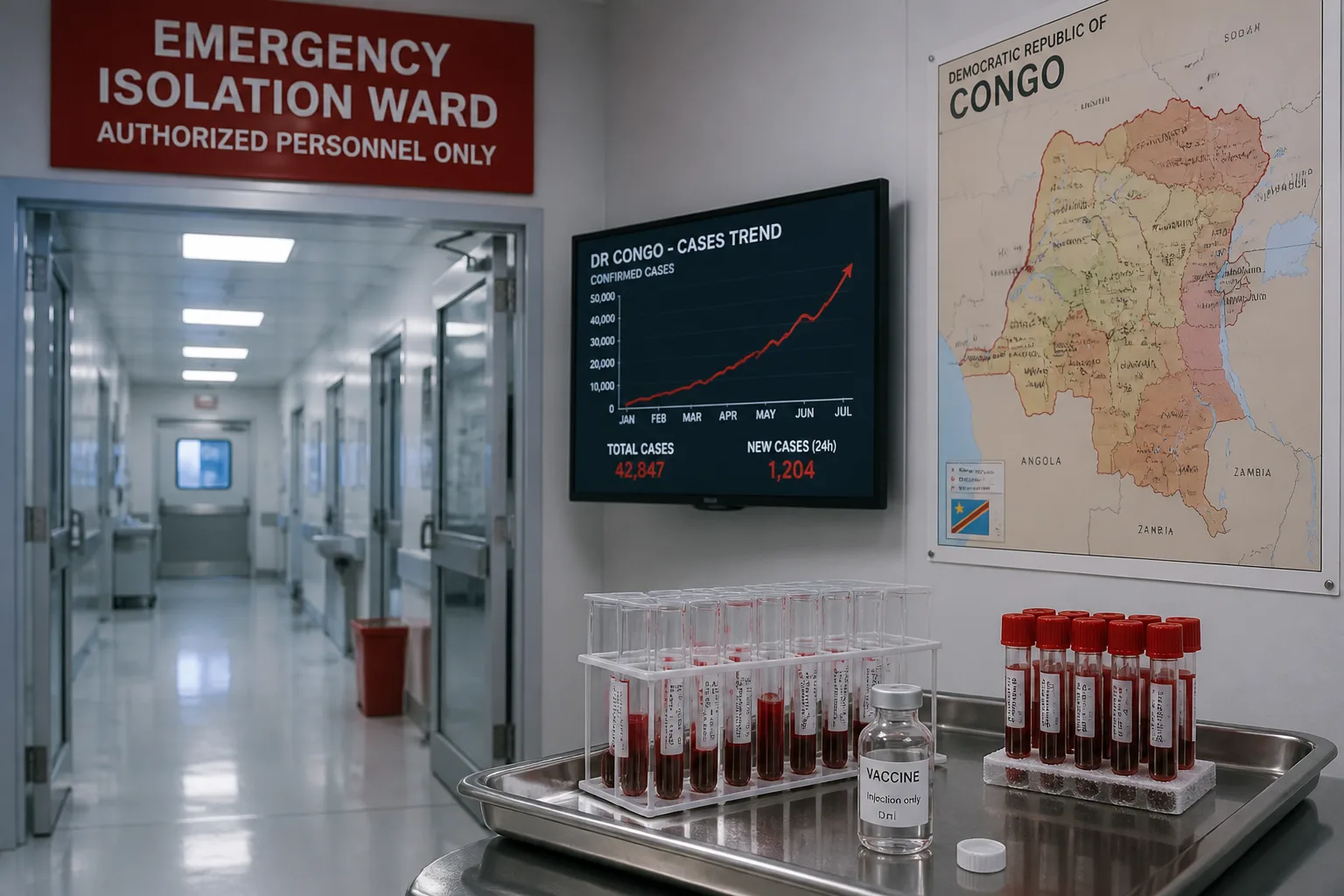
By the end of July, the World Health Organization (WHO) had confirmed 3,605 cases of the Bundibugyo strain and 1,587 deaths—an overall fatality rate of 44 percent. Those numbers are not just statistics; they represent a living, breathing crisis that is outpacing every previous outbreak in the country.
The spark fell in mid‑May 2026, when a cluster of cases emerged in Ituri province, the northeastern frontier that juts into South Sudan and Uganda. WHO declared a public‑health‑emergency of international concern on 16 May, a rare and serious designation that signals the potential for global spread. The Bundibugyo strain, distinct from the Zaire ebolavirus that drove the 2013‑2016 West African epidemic, has yet to be tackled by any approved vaccine or specific therapy.
In the week ending 30 July, the epidemic hit a blistering peak: 567 new infections and 296 deaths, the highest figures in a single week on record. WHO’s spokesperson, speaking on X, described the pace of transmission as “exceptional.” The agency warned that ongoing insecurity, mass displacement, and cross‑border movement are not just hindrances—they are amplifiers, pushing the virus into new communities and complicating containment.
While Ituri remains the epicenter, the virus has spilled into neighboring provinces. North Kivu and South Kivu—areas largely under the control of the Rwanda‑backed M23 armed group—have reported confirmed cases. The outbreak has crossed borders, with 20 patients diagnosed in Uganda, one case in France, and two cases that were treated in Germany after being detected in the DRC.
The absence of a licensed vaccine or treatment has sparked a flurry of research activity. In Singapore, Hilleman Laboratories announced plans to develop a recombinant vesicular stomatitis virus (rVSV)–based vaccine and to launch human trials. Across the Atlantic, the United Kingdom is recruiting volunteers for a phase‑1 trial of a similar rVSV candidate to evaluate safety and immune response.
The numbers now eclipse the DRC’s previous worst outbreak, which ran from 2018 to 2020 and recorded nearly 3,500 cases with almost 2,300 deaths. Over the past half‑century, Ebola has claimed roughly 15,000 lives across Africa, a staggering toll that underscores the urgency of a rapid response.
Health authorities in the DRC, along with partners in neighboring countries, are scaling up surveillance, contact tracing, and treatment capacity. Yet the twin challenges of active conflict and limited infrastructure make it difficult to reach remote villages and to implement standard protective measures.
As of 30 July, WHO remains in close contact with national governments, coordinating international assistance and monitoring the evolving situation. The development of a vaccine for the Bundibugyo strain remains a top priority, but the path from laboratory to licensure is a long one, with rigorous safety and efficacy testing required.
This outbreak highlights the need for sustained global health security, especially in regions where armed conflict, displacement, and disease intersect. The world watches as the DRC, the WHO, and the international community race against time to contain a virus that has no approved cure and is spreading faster than ever before.