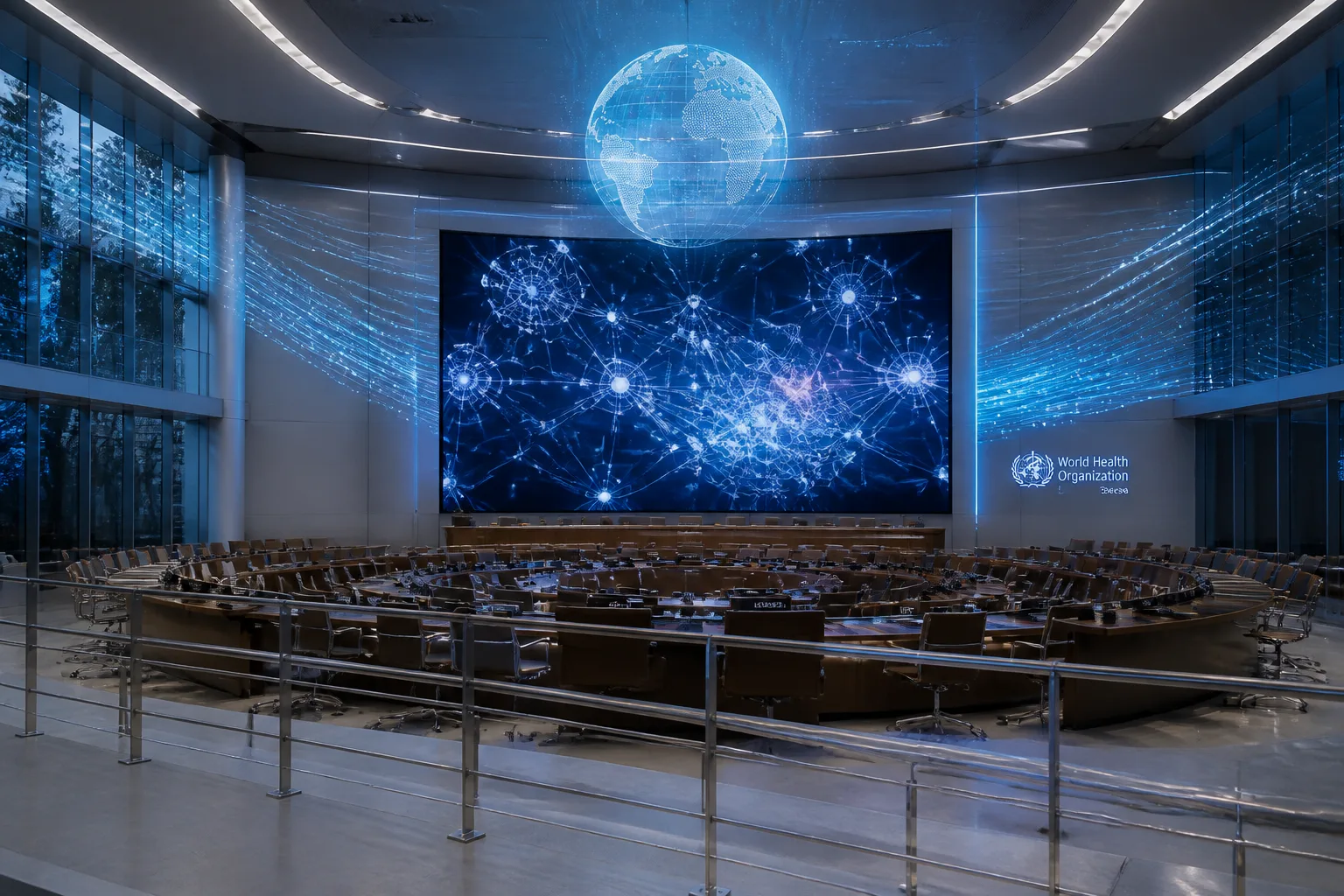
UN AI Summit in Geneva Urges Global Guardrails as Technology Surpasses Human Capabilities
On Monday, Geneva opened its doors to a gathering that could shape the future of a technology already outpacing the law—the United Nations' two‑day Global Dialogue on AI Governance.
From productivity boosters to health system upgrades, AI promises transformative gains, but the same tech also sparks fears of unprecedented dangers. The summit's agenda underscores the urgent need for safeguards that evolve alongside rapid advances, questioning whether AI can be harnessed safely, fairly, and without catastrophic fallout.
A key catalyst for the dialogue is the Independent International Scientific Panel on Artificial Intelligence, a 40‑member body spanning every region. Its first report, released on July 1, feeds directly into the Global Dialogue, offering governments a science‑based lens to anticipate future AI scenarios. The panel cautions that, as capabilities grow, science cannot yet guarantee that AI will not cause catastrophic harm—whether on its own or through malicious use.
Co‑chair Yoshua Bengio warned that the technology is “approaching or surpassing human capabilities in many domains” and is racing ahead of both scientific understanding and governments’ capacity to adapt. He urged more states to grasp AI’s future trajectories and to craft governance tools that steer benefits toward everyone.
Estonian Ambassador Rein Tammsaar, co‑chair of the Global Dialogue, painted AI as a potential equaliser. He highlighted machine learning’s power to boost economic development, competitiveness, science, health systems, and overall productivity. Yet he cautioned that if AI falls into the wrong hands, it could be weaponised for coercion, erode trust in governments, undermine democratic structures, and fuel propaganda.
Ambassador Egriselda López of El Salvador added that AI can help governments improve service delivery, but she pointed out the stark AI divide. While some nations boast robust infrastructure and research capacity, others grapple with connectivity and public infrastructure, making it harder to reap AI’s rewards.
Maria Ressa, co‑chair of the Scientific Panel, zeroed in on information integrity. She recalled how the first generation of AI accelerated the spread of lies on social media, turning fear, anger, and hate into viral content. Ressa described this phenomenon as an “information Armageddon” and warned that without the ability to distinguish fact from fiction, democracy cannot survive.
The Global Dialogue marks the first UN platform dedicated to AI governance, offering Member States an inclusive forum to chart international approaches and to bring together diverse stakeholders. Ressa stressed that no single country can manage AI alone; a multilateral solution is essential, and the United Nations is uniquely positioned to facilitate it.
Spanning July 6–7, the summit follows the UN General Assembly’s resolution that established the dialogue. Participants will work to craft universally‑accepted global guardrails, tackle the AI divide, and ensure that AI’s benefits are shared while its risks are mitigated.
At this nascent stage of AI governance, the next steps involve negotiating concrete principles, aligning them with existing national and regional regulations, and building mechanisms for monitoring and enforcement. The outcomes of Geneva could set the tone for AI policy worldwide.