UN to Convene Informal Exchanges on Military AI in Geneva, June 2026
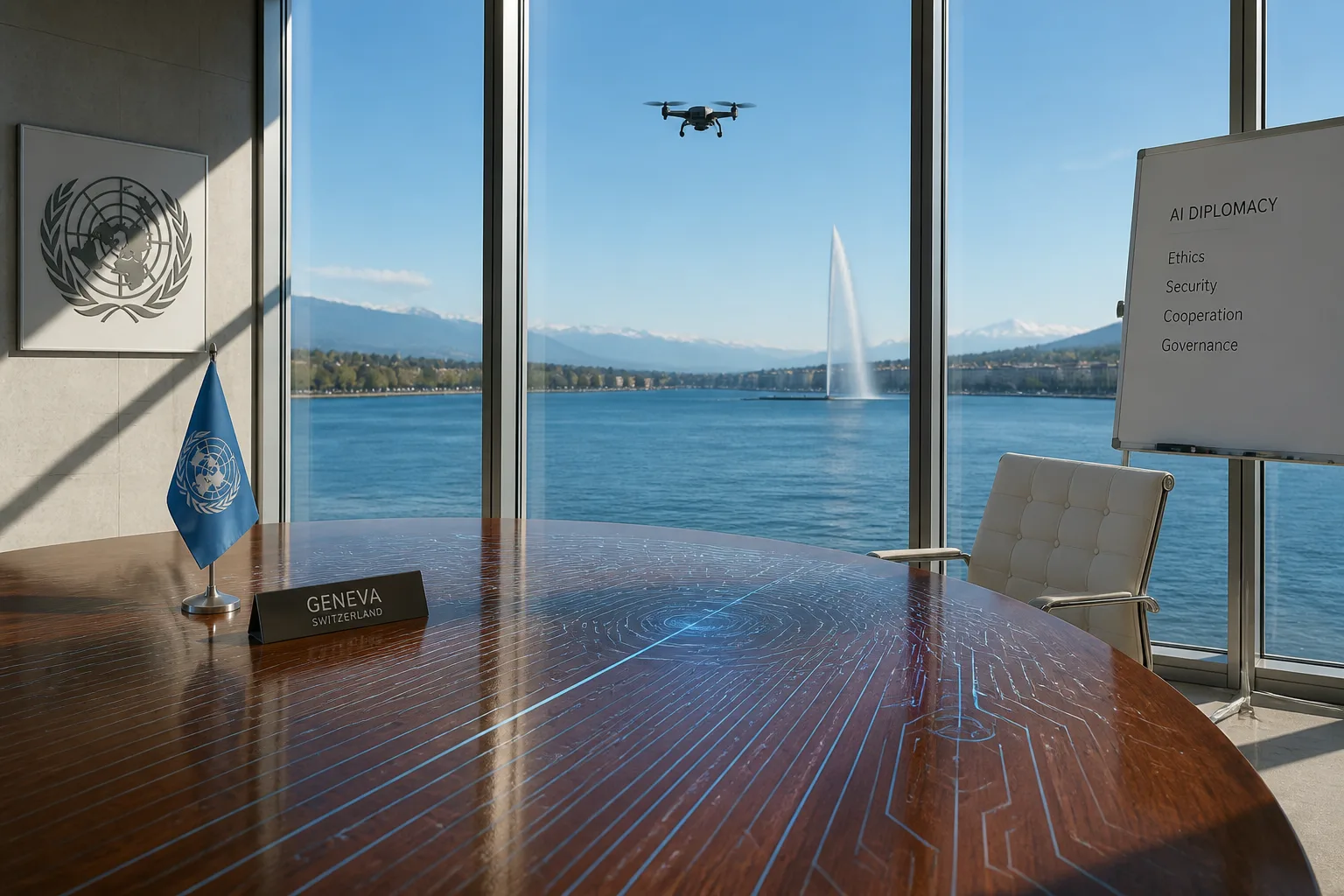
In Geneva this week, the United Nations is pulling back the curtain on one of the most controversial technology frontiers—military artificial intelligence. From 15 to 17 June 2026, diplomats and experts will gather in the Tempus building at the Palais des Nations for a three‑day informal exchange, a first‑ever UN‑led forum that zeroes in on how AI is reshaping defence.
The meetings are organized by the Office of Disarmament Affairs under General Assembly resolution 80/58, adopted in December 2025. The vote—167 in favour, five against, five abstentions—was tabled by the Netherlands and the Republic of Korea. The resolution affirms that international law applies to every stage of the AI life cycle and urges states to weigh both the opportunities and the risks that AI presents in defence contexts.
Although the agenda carries the label “informal,” the exchange represents the most structured UN process on military AI to date. No cameras are on, no binding decisions are expected, and delegates will produce only a factual summary for the Secretary‑General. The tone reflects the sensitivity of the topic and the desire to keep the conversation low‑profile.
The UN initiative sits against a backdrop of growing multilateral talks on technology and security. In 2025 and 2026, the Shangri‑La Dialogue in Singapore—a key Asia‑Pacific defence forum—hosted sessions on the vulnerability of underwater infrastructure. Those talks culminated in the Guiding Principles for Underwater Infrastructure Defence Exchanges, showing that dialogue can move beyond rhetoric to concrete policy frameworks.
The resolution itself was the product of extensive negotiation in the 80th General Assembly First Committee. Delegations raised concerns about the lack of clarity on format and the potential for the exchanges to influence future national positions. Some suggested a webinar format, but the term “exchanges” was ultimately chosen to accommodate a broad range of views.
Only two permanent members— the United States and Russia—voted against the resolution, underscoring divergent views on the UN’s role in regulating AI. The U.S. has repeatedly cautioned against over‑regulation and global governance at the UN, while Russia feared the exchanges could be used to set binding norms.
The UN’s approach contrasts with the traditional disarmament framework. Military AI is often treated as a weapons‑control issue, which can clash with the rapid pace of technological adoption in defence. The resolution explicitly calls for a balanced approach that incorporates humanitarian principles while recognising geopolitical realities.
If the informal exchanges fail to produce substantive outcomes, alternative venues may offer better prospects. Major defence conferences, such as the Shangri‑La Dialogue, could provide a more flexible environment for like‑minded states to discuss practical cooperation on AI testing, evaluation and deployment.
After the meetings, the Office of Disarmament Affairs will publish a factual summary outlining key points, areas of consensus or disagreement. The General Assembly will monitor the outcome, which could inform future policy discussions on AI in the military domain.
In sum, the Geneva exchanges represent a significant, if cautious, step toward a multilateral dialogue on military AI. Their success will hinge on states’ willingness to move beyond rhetoric and engage with the technical and operational realities of AI in defence.