Albanian Protest Movement Grows Over Trump-Linked Resort Plan on Sazan Island
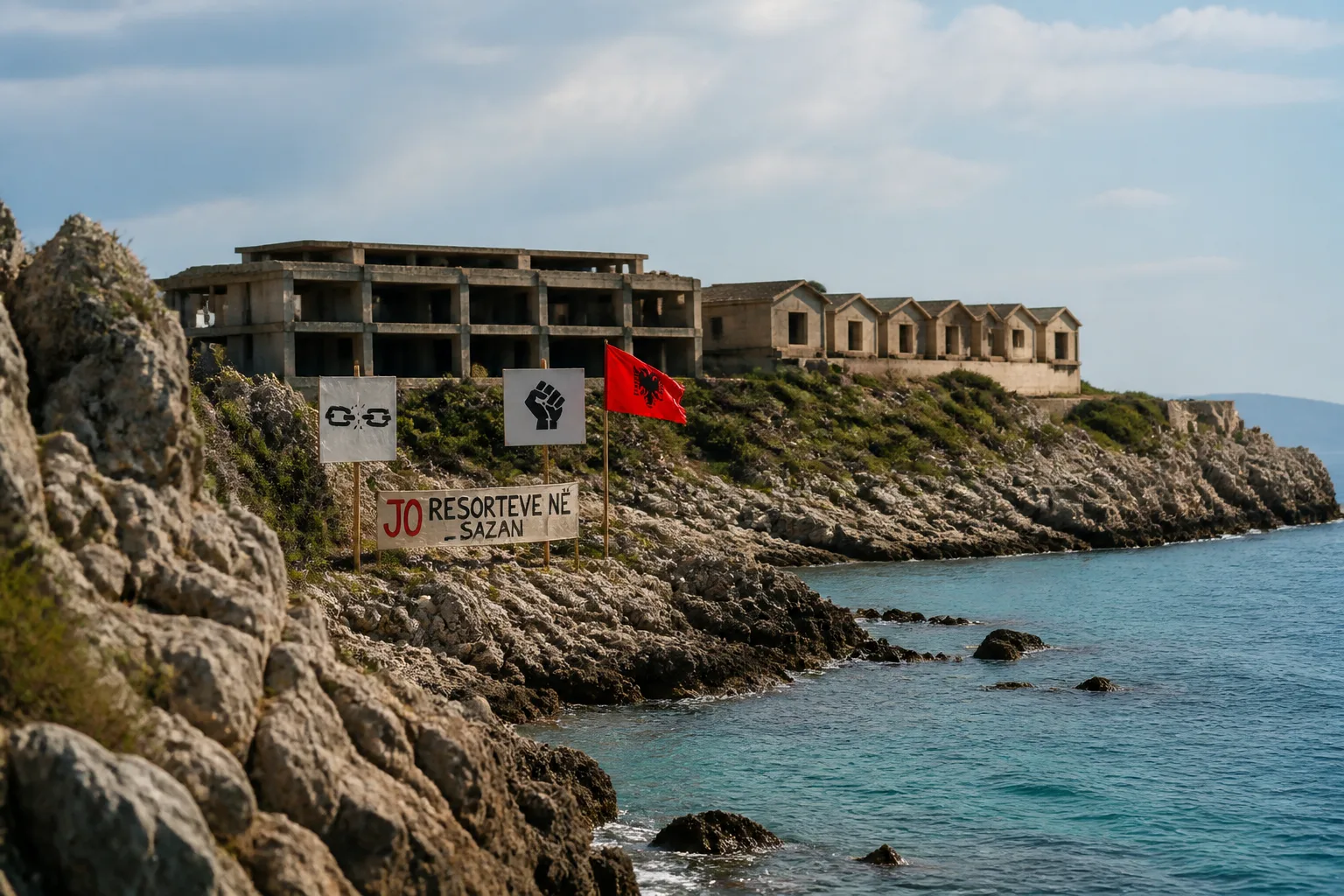
When the first waves of protest rippled across the Adriatic, thousands of Albanians turned the quiet village of Zvërnec into a battleground for nature, money, and politics. In late May 2026, crowds gathered on the coast, chanting and waving flags as they demanded that a luxury resort be halted on Sazan Island—a former military base now threatened by a $1.4 billion development backed by former U.S. President Donald Trump’s son‑in‑law, Jared Kushner.
Sazan Island, the largest of Albania’s islands, sits just off the Strait of Otranto, near the mouth of the Bay of Vlorë. It has long been a military exclusion zone and, since the 1990s, part of the Karaburun‑Sazan Marine Park—a protected area that shelters flamingos, Mediterranean monk seals, and loggerhead sea turtles. In January 2025, the Albanian government granted the resort project “strategic‑investor” status, allowing the Kushner‑backed company to transform the abandoned base into luxury hotels and private villas.
The idea was first publicized by Ivanka Trump and Jared Kushner in 2025, with the island’s purchase reported as a $1.4 billion transaction. Critics argue the venture threatens the fragile ecosystem and signals a broader pattern of state capture, where foreign money appears to buy influence. For many Albanians, the project has become a symbol of corruption and a reminder of how political elites can sideline environmental and public interests.
The protests ignited on 23 May 2026 in Zvërnec, right as preparatory works began. A week later, a demonstrator was reportedly assaulted during a demonstration on 30 May—an incident that, according to Wikipedia, galvanized the movement. Young activists, many from Generation Z, wielded flags, Molotov cocktails, fireworks, and flares. Police responded by arresting dozens of protesters, including minors, and the unrest quickly spread to Tirana, other parts of the country, and Albanian diaspora communities abroad.
What began as a local objection to a resort grew into the Flamingo Revolution, a broader anti‑corruption movement that now demands Prime Minister Edi Rama’s resignation. Rama’s government has faced accusations of corruption, state capture, and abuse of power, especially after Deputy Prime Minister Belinda Balluku was indicted on corruption charges in 2025. In response to the protests, Rama dismissed them as a “hybrid war” orchestrated by enemies of Albania and Israel—a claim that, while dismissed by many, highlights the political polarization surrounding the project.
Opposition leader Sali Berisha, who initially supported the resort, has been criticized by demonstrators who see both Rama and Berisha as part of the same entrenched establishment. The protests also foreground environmental stakes: the resort would be built on a protected coastal area that hosts several endangered species. Media outlets have dubbed the movement the Flamingo Revolution, referencing the flamingos that inhabit the wetlands near Zvërnec and symbolizing the fight to preserve Albania’s natural heritage.
As of mid‑June 2026, the protests continue without a negotiated settlement. The Albanian government insists that the project complies with all legal requirements and denies any unlawful conduct. Meanwhile, protesters remain on the streets, demanding accountability and a halt to the resort’s development. The situation remains fluid, with government and opposition leaders engaging in public discourse while the movement persists across the country and among Albanian communities abroad.
In short, the dispute over Sazan Island has become a flashpoint for wider questions about governance, environmental stewardship, and foreign influence in Albania. Whether the Flamingo Revolution will force a policy shift or merely stall the project for now remains to be seen, but the voices of thousands of Albanians—both at home and in the diaspora—have clearly made it a story that will stay in the national conversation for months to come.