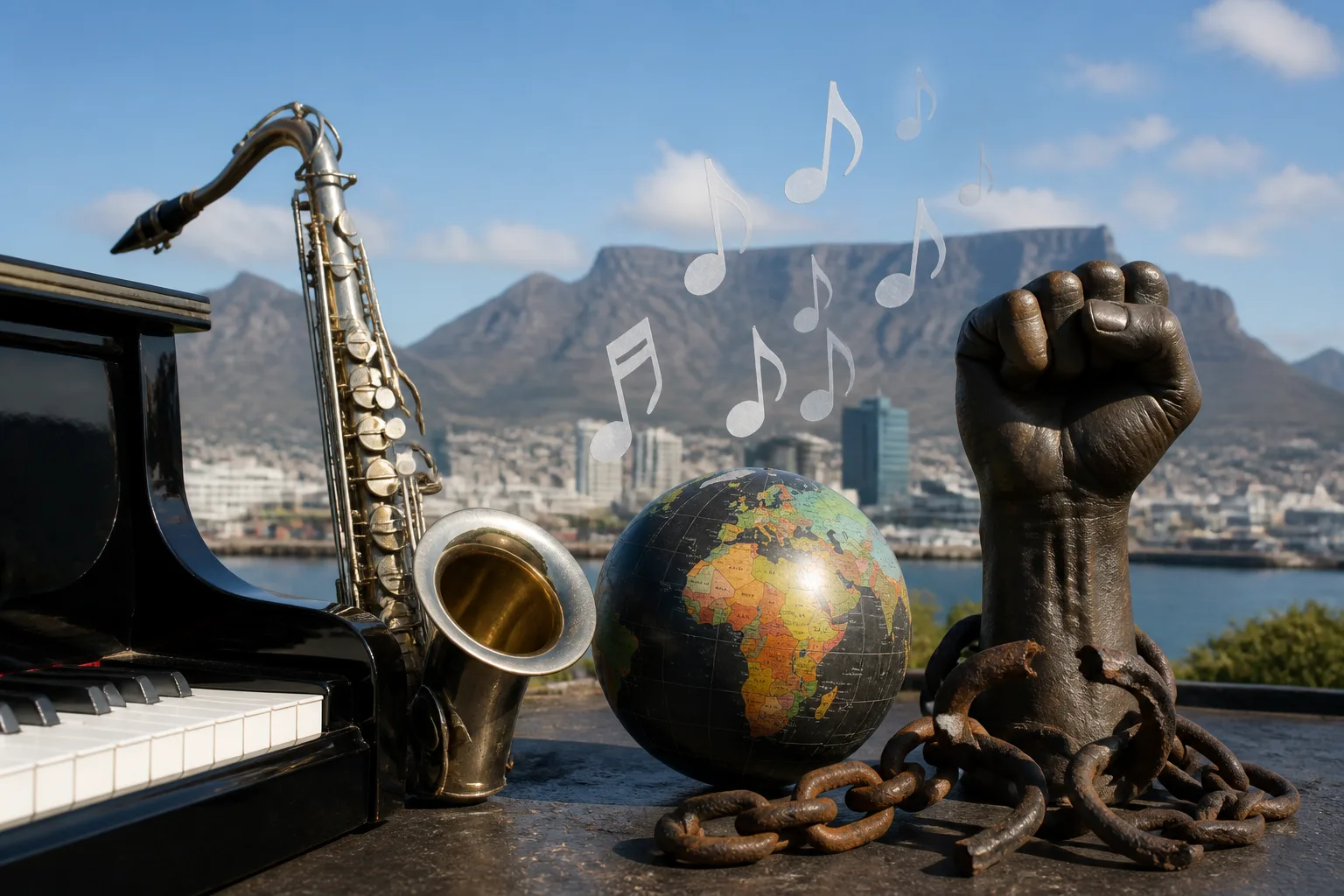
Abdullah Ibrahim: From District Six to Global Jazz Icon and Anti-Apartheid Voice
Adolph Johannes Brand, born 9 October 1934 in Cape Town, later became known as Dollar Brand and then Abdullah Ibrahim. He grew up in District Six, a diverse inner‑city area that was declared a white zone in 1966 and forcibly cleared in 1982. The multicultural environment of District Six shaped his early musical explorations; he began playing piano at seven.
Ibrahim’s first public successes came in the mid‑1950s while performing as a bebop‑inspired jazz pianist. In 1959 he joined the Sophiatown‑based group Jazz Epistles, alongside Kippie Moeketsi, Hugh Masekela, Jonas Gwangwa, Johnny Gertze and Makaya Ntshoko. The band recorded the first black South African jazz LP, Jazz Epistle Verse One.
In 1962 Ibrahim left South Africa for Europe, touring with Gertze and Ntshoko as The Dollar Brand Trio. In Switzerland the trio met South African vocalist Sathima Bea Benjamin, who introduced them to Duke Ellington. The trio recorded two sessions with Ellington, one featuring Benjamin.
The Dollar Brand Trio entered the international jazz circuit and performed at the Newport Jazz Festival in New York in 1965. In the same year Ibrahim married Sathima Bea Benjamin and the couple relocated to New York. Throughout the 1960s and 1970s Ibrahim maintained close ties with Ellington and other leading jazz musicians, while continuing to record and tour worldwide.
In 1968 Ibrahim converted to Islam and adopted the name Abdullah Ibrahim. His spirituality became a core element of his music and public persona. Despite his growing international reputation, he remained connected to South Africa. In the mid‑1970s he returned briefly to the country and recorded the 14‑minute track “Mannenberg” in June 1974. The piece was recorded in one take and drew on Cape jazz—a blend of American jazz, marabi, mbaqanga, langarm, vastrap and ticky draai. Within a year it sold more copies than any other South African jazz album and was later performed at protest gatherings, becoming an anthem of resistance.
Ibrahim’s political stance was clear. After the Soweto uprising on 16 June 1976 he declared support for the African National Congress and returned to New York. In 1978 he released “Anthem for the New Nation”. The following year he recorded “African Marketplace” with a 12‑piece band; the album was later ranked number 70 in a list of The 100 Jazz Albums that Shook the World.
The end of apartheid in the early 1990s brought Ibrahim back to South Africa. In 1994 he performed with a symphony orchestra at Nelson Mandela’s inauguration, where Mandela reportedly referred to him as “our Mozart”. In 1999 Ibrahim founded a music academy in Cape Town and launched the Cape Town Jazz Orchestra in 2006.
His later recordings include the solo piano album “Senzo” (2008), a nod to his father’s name and to the Nguni meaning of creation, and “The Balance” (2019). The Wall Street Journal described the 2019 release as a continuation of his growth as a jazz master.
In 2024 Ibrahim released his final double album, “3”, which received critical acclaim. Throughout his career he remained a quiet but powerful voice against apartheid, using music as a form of dignity, self‑respect and protest.
Ibrahim’s legacy extends beyond performance. He nurtured new musical expressions during apartheid, fostering a culture that survived the regime and continued to evolve after its collapse. His life and work illustrate how a single artist can embody the complex identities of a city, the resilience of a people, and the transformative power of art.