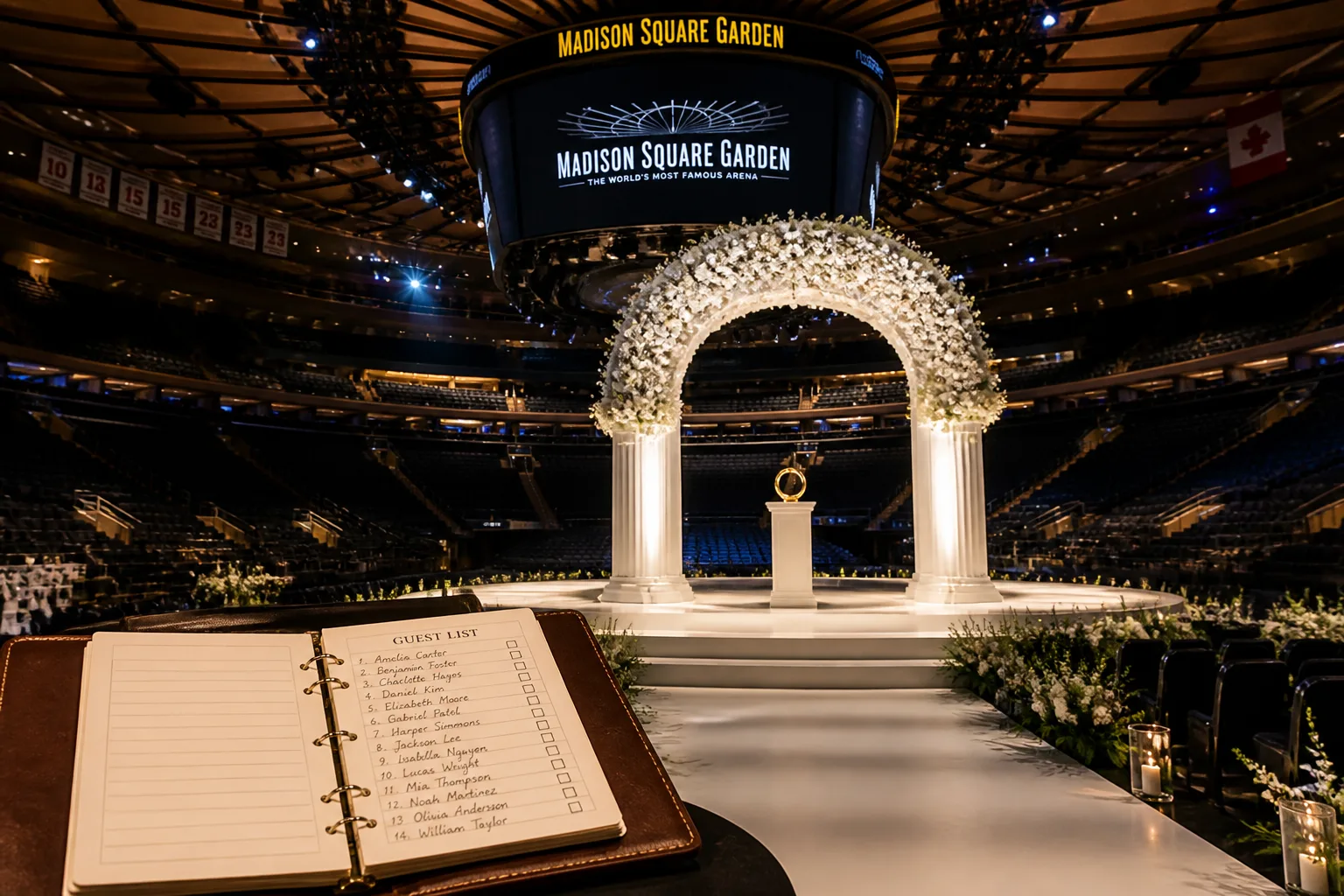
Taylor Swift and Travis Kelces Planned Madison Square Garden Wedding Sparks Debate Over Guest-List Rules
If you’re a fan of Taylor Swift or a follower of NFL tight end Travis Kelce, you’ve probably heard the buzz: the pop‑star and the football star are planning a wedding that’s already stirring up more than just romantic headlines. In early June 2026, reports confirmed that the couple intends to exchange vows at New York City’s Madison Square Garden on July 3, 2026, in front of an estimated 1,100 to 1,200 guests.
But the real headline isn’t just the venue or the star‑power—it’s the couple’s strict "no ring, no bring" policy. The rule means that only those who are married, engaged, or in a long‑term committed relationship can bring a plus‑one. Anyone else must attend alone. That seemingly simple line has sent shockwaves through their friend circles.
Take Selena Gomez, who wed producer Benny Blanco, and Patrick Mahomes, who’s been married to Brittany for more than four years—both can bring their partners without a hitch. On the flip side, close friends in serious but unmarried relationships—like supermodel Gigi Hadid and actor Bradley Cooper, or singer‑songwriter Gracie Abrams and actor Paul Mescal—are expected to arrive solo.
The policy isn’t without precedent. In 2017, Pippa Middleton set a similar boundary at her wedding, which prompted the then‑unmarried Meghan Markle to skip the church ceremony and join the reception later. Since then, the rule has become a touchstone for modern wedding etiquette debates.
Social media split into camps. On Reddit, users weighed the anxiety of attending a major event alone, with one anonymous comment calling the wedding the "year’s biggest event" that might feel uninviting for single guests. Supporters of the policy argued that a wedding is a deeply personal milestone and that the couple has the right to curate a secure environment for themselves and their loved ones.
Jan Goss, a Texas‑based etiquette expert, said the backlash reflects a broader cultural shift in which guests view invitations as transactions rather than honors. She explained that while hosts should invite established partners together, they are not ethically obligated to offer plus‑ones to casual dates.
For those who find themselves attending without a partner, Goss advises reframing the experience as an opportunity to meet new people. She recommends focusing on the couple by asking other guests how they know the bride and groom, which can spark conversation and reduce personal discomfort.
Madison Square Garden itself carries a storied legacy—from sports to concerts. Opened in 1968, the arena is one of the world’s busiest music venues, making it a fitting backdrop for a grand yet controlled celebration.
Ultimately, the "no ring, no bring" rule places the decision in the hands of Swift and Kelce. Etiquette experts agree that while hosting is an art of hospitality, a wedding is not a public service. Guests who feel overwhelmed by the policy can decline the invitation politely and send a congratulatory gift.
As the date approaches, the world watches whether Swift and Kelce will follow through with the Madison Square Garden ceremony. Their guest‑list decision highlights the tension between celebrity privacy and the expectations of a wide social circle, and it may influence how future couples approach wedding invitations.